

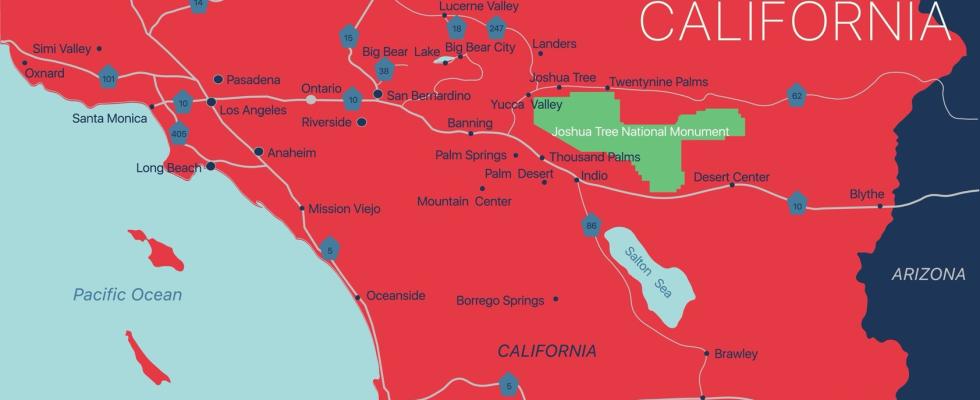
The California Department of Forestry and Fire Protection released hazard severity zone maps for the Southern California region on Monday. It was the fourth and final release of the updated mapping rollout which began six weeks ago. The maps specifically account for areas that fall under the responsibility of local fire departments.
As expected, fire hazard severity has increased throughout the Southland, pushing further into populated areas. “Very High” fire hazard zones have increased 26% since 2011, now comprising 817,212 acres in Southern California. 4.6 million acres in Southern California are now classified as “moderate,” “high,” or “very high” in the fire hazard categories.
Forty-three new cities in the Greater Los Angeles area have been added to the “very high” zones. As LAist notes, in the Los Angeles area, “‘very high’ fire hazard severity now extends north of Ventura Boulevard in some parts of the San Fernando Valley, across San Vicente Boulevard farther into Santa Monica, and south of Sunset Boulevard in West Hollywood.”
San Diego County’s “very high” fire hazard zones expanded especially in the inland and mountainous areas. There is heightened risk in Escondido, Poway, and Ramona.
Mapping for the Inland Empire was especially troubling, according to the Los Angeles Times:
“In the latest release — comprising all of Southern California, including San Diego, San Bernardino, Riverside and Orange counties — the cities of Hesperia and Jurupa Valley saw the most significant percentage increase in acres zoned, with the cities’ total averages in hazard zones increasing more than 35- and 45-fold, respectively. Jurupa Valley saw its ‘very high’ zone expand from 226 acres to 6,195. Hesperia’s grew from 715 to 15,359.”
Overall, California’s “very high” zones have increased 35% since 2011, from 860,000 acres to nearly 1.2 million. The new “high” category includes 1.2 million acres, while another 4.5 million acres fall into the “moderate” category.
"The sheer number of more cities and areas that are now being designated in a fire hazard severity zone goes to show just how serious of a wildfire problem we have," State Fire Marshal Daniel Berlant told ABC Eyewitness News.
Local governments have 120 days to adopt the maps. The public comment period is 90 days. Governments will be required to conduct regular reviews of evacuation routes in the heightened zones. They must also designate essential public facilities such as hospitals outside of these zones.
In “very high” hazard areas, homeowners will be required to maintain 100 feet of defensible space around their properties, free of brush or other flammable debris. They will have to disclose the heightened fire hazard when they sell their homes. New construction in both the “high” and “very high” categories must also adhere to certain rules.
How vulnerable is your neighborhood? Click here to find out.