

America's coastal cities are sinking more rapidly than previously thought, elevating the risk of flooding and exacerbating the impact of sea level rise from climate change. That’s according to a disturbing new report published in the journal Nature.
Researchers from Virginia Tech analyzed 32 coastal cities, including 10 in California: Richmond, Oakland, San Francisco, South San Francisco, Foster City, Santa Cruz, Long Beach, Huntington Beach, Newport Beach and San Diego.
Overall, the researchers found that one in 50 people in the country’s coastal cities could experience significant flooding by 2050. Around 1,006 to 1,389 km of land will be threatened by relative sea-level rise (SLR) combined with subsidence (sinking), impacting some 31,000 to 171,000 properties.
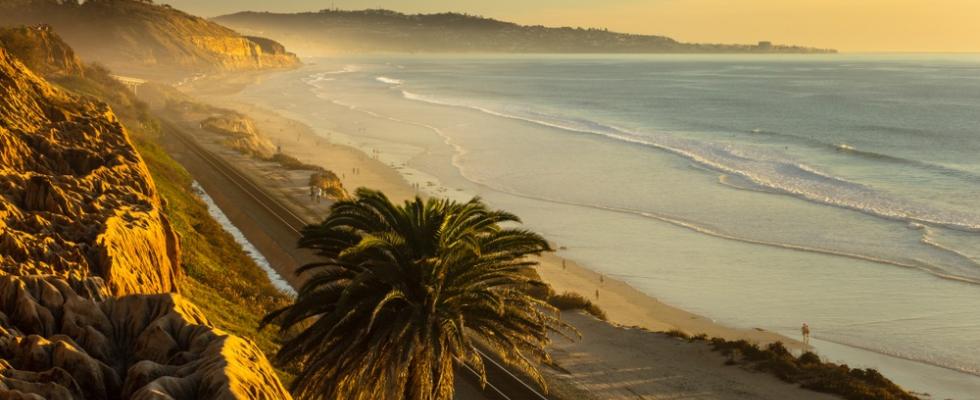
Fortunately, the situation on the Pacific Coast is milder compared to other parts of the country.
On the Pacific coast, we find a considerable divergence in the impacts of relative SLR compared with the US Atlantic and Gulf coasts. By 2050, the cumulative exposed area from ten cities on the US Pacific coast is 20–40 km2, with a population exposure of 6,000–30,000 people and 3,000–15,000 properties worth US$4.5–22 billion (Fig. 4, Table 1 and Supplementary Table 4). The comparatively low inundation hazard may be attributable to the higher topographic elevations, lower rates of land subsidence and relatively low rates of geocentric SLR on the Pacific coast relative to the Atlantic and Gulf coasts30. Although the inundation hazard for Pacific coast communities (California’s coast) by 2050 is relatively modest, rock coast cliff retreat31 and the projected increase in the high-tide flooding3are further factors that would affect some coastal residents and properties.
The mitigating effect of higher elevation levels and lower rates of subsidence can be seen in San Francisco. Many mountainous parts of San Francisco will be safe from flooding, while the area around San Francisco International Airport is sinking into the bay.
Cities along the Pacific Coast are also better fortified. According to the study, over 50% of the flood control structures in the cities it studied were located on the Pacific Coast.
However, more action is needed across the board. Sea levels along U.S. coastlines are projected to rise by 0.25–0.3 m by 2050, and around 40% of the population lives near the coast. Recommended measures include additional sea walls, raising properties above the flood level, and replenishing aquifers, as groundwater extraction remains a top contributor to subsidence.
Read the report here.