

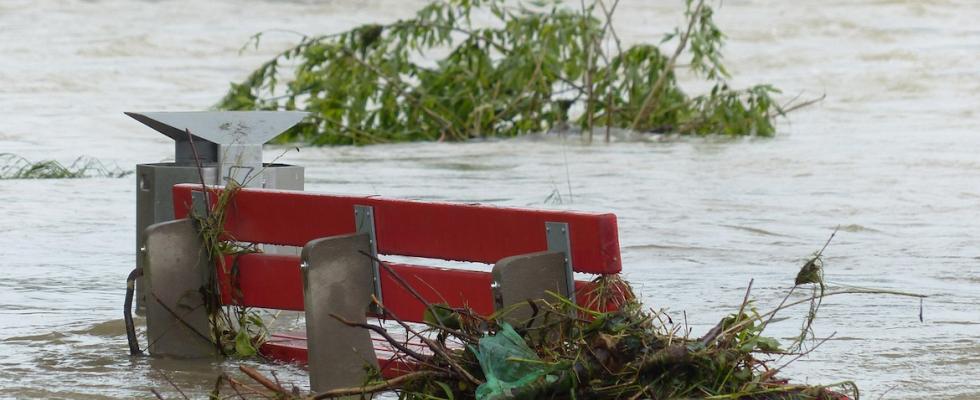
The staggering death toll from the July 4th floods in Texas is a brutal testament to government failure at nearly every level.
The morning of the floods, first responders asked that Kerr County trigger its public emergency alert system. According to radio transmissions reviewed by The Texas Newsroom, the process was delayed for hours because dispatchers said it required special authorization.
There were no outdoor sirens to sound the alarm. Former commissioner Tom Moser told CBS News that Kerr County had applied for a program to install sirens, but that application was denied by the state. During the last legislative session, Texas lawmakers also shot down House Bill 13, which would have established a grant program to help local governments fund new emergency communication systems.
As residents slept, the Guadalupe River began rising rapidly, surging 26 feet in 45 minutes and cresting around 37.5 feet. Devoid of alerts, by the time many residents learned of the danger, it was too late.
With central Texas under water, search-and-rescue teams needed to act quickly. However, CNN reports that there was a delay at the Federal Emergency Management Agency (FEMA):
“Homeland Security Secretary Kristi Noem — whose department oversees FEMA — recently enacted a sweeping rule aimed at cutting spending: Every contract and grant over $100,000 now requires her personal sign-off before any funds can be released.”
That approval reportedly did not come until Monday — 72 hours after the storm.
CNN’s reporting has been backed up by multiple news outlets, including the Washington Post. But in a post on X, the Department of Homeland Security called it a “fake news lie.”
As of July 24, at least 136 people have been confirmed dead. Tragically, many of the victims were children.
Despite the obvious failures, there has been no criticism from the Trump administration. Everyone did an “incredible job” under the circumstances, the President said.
When a reporter asked about the lack of emergency alerts, Trump dismissed the question. Only “a bad person” would ask such a thing, he replied. Trump similarly labeled critics of the federal response “evil.”
Texas officials have been no more introspective.
“Pointing fingers is for losers,” Congressman Chip Roy (R-TX) told reporters at a press conference after the floods. That sentiment was echoed by Governor Greg Abbott and Senator Ted Cruz (R-TX), who declared this was no time for “partisan finger-pointing.”
For Angelenos, the contrast couldn’t be more stark. There was nothing but finger-pointing when wildfires ripped through parts of L.A. County in January. Trump almost immediately called for the resignation of California’s Governor at the time. Referring to him as Gavin “Newscum,” the President wrote: “This is all his fault!!!”
Texas Senator Ted Cruz had no problem assigning blame then either. He said state and local officials had “failed” Southern California, and that their policies “unquestionably” contributed to the destruction.
Trump has pledged full and unconditional support to Texas. But after the destruction in California, the President called to withhold future aid unless a series of policy changes were implemented. California officials say Trump and the Republican-led Congress are still blocking $40 billion in disaster relief from L.A.
The criticism of California officials was certainly warranted. The state and City of L.A. were also guilty of missteps — from questionable fire management, to local budget cuts and delayed maintenance on an aquifer that left firefighters without adequate water. The fires destroyed thousands of structures and claimed at least 28 lives.
Like the Texas floods, the California wildfires were the result of an extreme weather event — the kind experts have warned will become more common with climate change. Wind speeds exceeded 100 mph in some areas leading up to the fires.
One obvious difference between the two disasters is political. Texas is red; California is blue. Trump won Kerr County by 77%, while just 32% of L.A. County voters went for Trump. Texas’ Governor is a political ally, while California’s is a political foe.
We don’t have to speculate whether Trump’s personal feelings dictate his response to emergencies. He’s admitted as much. When asked last month if his “recent dust-ups” with Newsom might impact California’s fire relief, Trump said they probably would.
“Hatred is never a good thing in politics. When you don’t like somebody, you don’t respect somebody, it’s harder for that person to get money when you’re on top.”
Welcome to our new reality, where loyalty to the President apparently determines how residents are treated after a natural disaster, whether government officials can be held accountable for deadly blunders, and whether states get all the federal aid they need.